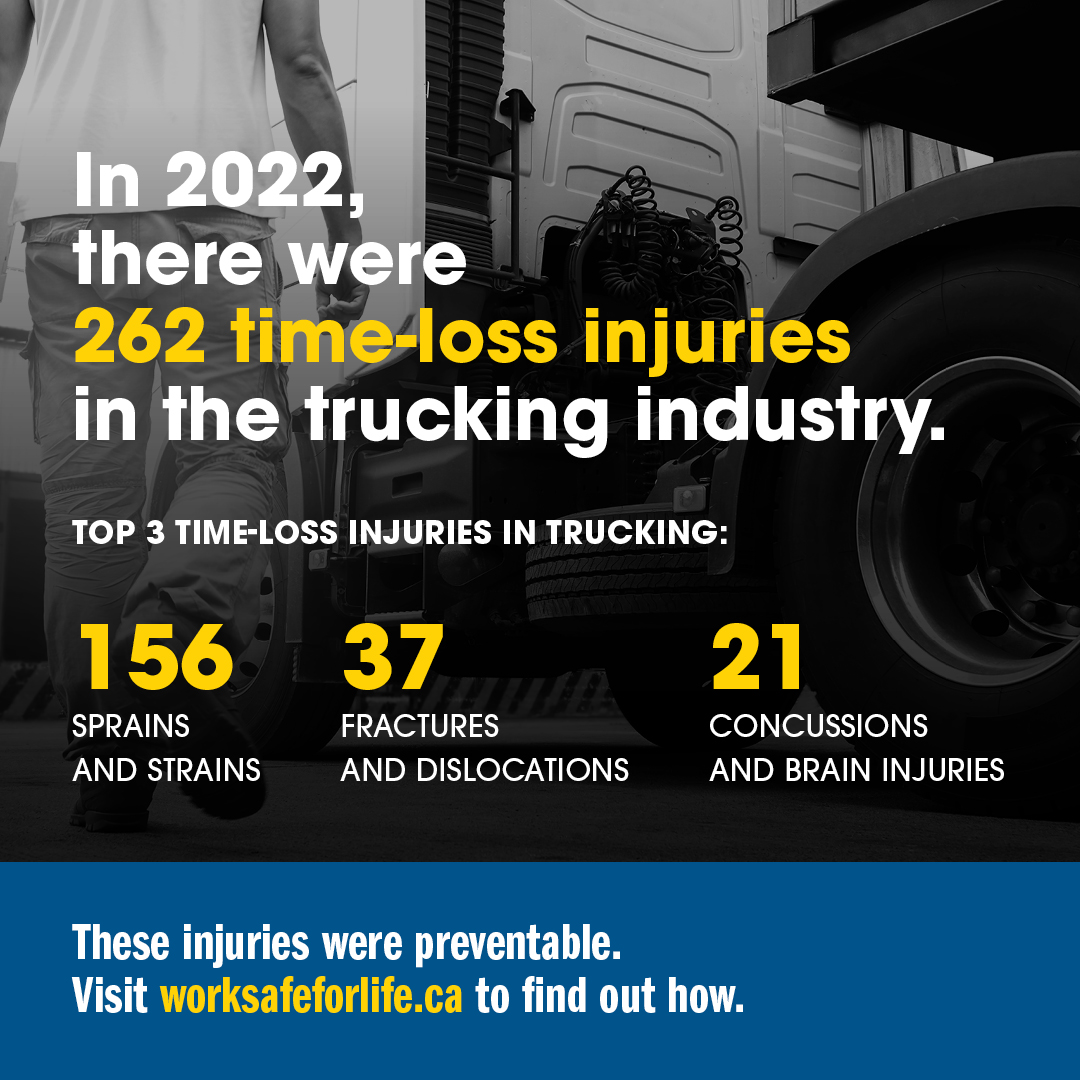
The trucking industry is an essential part of the economy of Nova Scotia and employs over 20,000 in workers in the province. It faces considerable safety risks. From musculoskeletal injury risks to the obvious hazards associated with long hours on the road, trucking is an industry where safety is critical.
The following workplace hazards are common in the trucking industry:
- Fatigue
- Musculoskeletal (sprains/strains) injuries
- Slips, trips, and falls
- Chemical hazards
- Musculoskeletal injuries (sprains/strains)
- Vehicle collisions
Use the OH&S Risk Mapping Tool for injury prevention to identify and mitigate these risks.
The Trucking Safety Association works to reduce the impact of workplace injury in the trucking sector. Employers and workers can use their training videos as educational resources to improve safety in the workplace.
Canadian Centre for Occupational Health and Safety
Working to Well - Return to Work website
Physical Hazards
| PHYSICAL HAZARDS
|
PREVENTION:
|
| Uneven, unstable or slippery work surfaces, and areas?
|
Stabilizing work areas
|
| Working on platforms or at height?
|
Fall protection systems
|
| Working with hazardous materials?
|
Regulatory guidelines (ie: federal and,provincial law, TDG, WHMIS, etc.
|
| Working alone?
|
Communication system set-up
|
| Lifting and moving heavy loads?
|
Proper first aid kit
|
| Securing unstable/awkward cargo or couplings?
|
Well-maintained equipment and vehicle
|
| Driving in extreme weather?
|
Safety training for all tasks, including hazard assessment
|
| Paying constant attention to public drivers?
|
Proper licensing and classifications
|
| Roadside adjustments or repairs?
|
Personal protective equipment and proper work clothing
|
| Exposure to the hazards of other worksites?
|
Involving workers in the design of safe working processes
|
Ergonomic Hazards
| ERGONOMIC HAZARDS
|
PREVENTION:
|
| Repetitive work motions?
|
Proper work positioning
|
| Forceful motions of the hands and wrists, arms and shoulders, knees and legs?
|
Training in safe lifting, moving and securing, of heavy/awkward cargo
|
| Rigid positions of the back?
|
Hazard assessment process for work areas and tasks
|
| Awkward working positions?
|
Involve workers in the design of safe, working processes
|
| Awkward or uneven work areas?
|
Rest and stretch breaks
|
| Heavy and awkward loads to lift and transfer?
|
Preventative measures for tools, equipment, and vehicles
|
| Equipment or vehicles that vibrate?
|
Inspection and maintenance measures
|
Environmental Hazards
| ENVIRONMENTAL HAZARDS
|
PREVENTION:
|
| High noise levels?
|
Noise zones
|
| Temperature extremes?
|
Safe practice for outdoor work
|
| Wet environments?
|
Rest periods in comfortable areas
|
| Chemicals or toxic fumes?
|
Water supply for drinking and washing
|
| Biting insects, rodents or wildlife?
|
Toilet facilities
|
| Breathing and lung irritants?
|
Adequate airflow and ventilation
|
| Working around unstable objects?
|
Air quality testing
|
| Skin irritations?
|
Industry codes of practice
|
| Moulds, fungus and mildew?
|
Involve workers in the design of safe work processes
|
| Confined spaces?
|
Safe work training, practices and proper equipment
|